Medical Consent Forms: 210+ Free Templates, Real-World Examples, and Customization Guide

Reviewed by Compliance and Legal Advisory Team

Published August 8, 2026
25 min read

Key Takeaways

  • Free Layout Library: Access over 210+ free, customizable templates for basic layout drafting and manual PDF printing across multiple clinical specialties.
  • Free Library vs. Automated eConsent: The free templates and local builder are ideal for clinics printing paper forms. For clinical trials or patient care requiring fully automated eConsent, HIPAA compliance, client-side encryption, and EHR synchronization, a dedicated eConsent platform must be utilized.
  • Legally Valid Anatomy: Ensure layouts start with a high-priority Key Information block, detail material risks, present reasonable alternatives, and conclude with sequential signature routing.
  • Strict Legal Boundaries: Avoid exculpatory clauses. Federal regulations strictly prohibit asking patients to waive their legal rights or release providers from liability.
  • Risk-Free Platform Testing: Register for a free sandbox account to test automated eConsent routing, compliance linting, and system integrations before scaling.

Patient authorization is the core legal and ethical requirement of modern healthcare. However, the traditional execution of medical consent forms is frequently treated as a minor clerical step, often reduced to handing a patient a clipboard in a crowded waiting area. This approach introduces massive legal vulnerabilities, raises compliance risks, and slows down clinical scheduling.

To achieve true informed consent, a patient must thoroughly comprehend the treatment, its benefits, the specific complications, and the available alternatives. Achieving this standard requires highly structured document templates, clear plain-language phrasing, and secure transmission systems. This guide reviews the layout requirements for compliant consent documentation, lists our database of over 210+ templates across multiple specialties, displays live interactive examples, and details how modern electronic systems protect clinic operations.


Standardizing document design across a complex medical group requires templates tailored to specific specialties. The directory below contains structured layouts designed to satisfy standard clinical guidelines. Select a specialty to view the relevant templates in the central directory.

General Surgery

Standardized consent layouts for appendectomies, gallbladder removals, hernia repairs, and preoperative anesthesia.

Browse General Surgery →

Cardiology

Templates for pacemaker insertions, coronary angioplasty, cardiac ablations, and cardiovascular research protocols.

Browse Cardiology →

OB/GYN

Documentation for Cesarean sections, hysterectomy procedures, VBAC/TOLAC options, and contraceptive device implants.

Browse OB/GYN →

Pediatrics & Primary Care

Consent and authorization forms for pediatric vaccinations, diagnostics, and wellness programs.

Browse Pediatrics →

Dermatology & Aesthetics

Form layouts covering Botox, dermal fillers, chemical peels, microneedling, laser hair removal, and photo releases.

Browse Dermatology →

Telemedicine & Virtual Care

Informed consent templates for telehealth consultations, remote patient monitoring (RPM), and virtual therapy.

Browse Telemedicine →

Clinical Research

FDA Part 11 compliant layouts for clinical trials, genetic testing research, and biospecimen storage choices.

Browse Clinical Research →

Dental & Oral Surgery

Templates covering wisdom teeth extractions, dental implants, root canal therapy, and orthodontic treatments.

Browse Dental →

Mental Health & Psychiatry

Documentation for psychiatric care, psychotropic medications, and general mental health services.

Browse Mental Health →

Orthopedics

Consent forms for joint replacements, spine surgery, ACL reconstructions, and musculoskeletal care.

Browse Orthopedics →

Plastic Surgery

Templates for reconstructive and cosmetic surgeries, breast augmentations, rhinoplasty, and liposuction.

Browse Plastic Surgery →

Oncology

Consent templates for chemotherapy administrations, radiation therapy, and port placements.

Browse Oncology →

Hematology

Documentation for blood transfusions, donor consents, and structured blood refusal agreements.

Browse Hematology →

Neurology

Consent forms for neurological diagnostics, lumbar punctures, spinal injections, and craniotomies.

Browse Neurology →

Ophthalmology

Templates for LASIK refractive correction, cataract surgery with IOL, and vitrectomies.

Browse Ophthalmology →

Urology

Documentation for prostate biopsies, robotic prostatectomy, vasectomy, and stone treatment.

Browse Urology →

Rehabilitation & Therapy

Consent forms for physiotherapy, physical therapy evaluations, and mental health counseling services.

Browse Rehabilitation →

Emergency & Urgent Care

Consent forms for urgent care clinics including laceration repair, fracture management, and IV sedation.

Browse Emergency Care →

Gastroenterology

Documentation for colonoscopies, upper endoscopy procedures, capsule diagnostics, and liver biopsies.

Browse Gastroenterology →

Fertility & Reproductive Care

Consent templates for IVF treatment protocols, egg freezing choices, and embryo transfers.

Browse Fertility →

Privacy & Compliance

Documentation layouts for HIPAA disclosures, photography releases, and research databases.

Browse Privacy →

Body Aesthetics & Art

Consent and release forms for tattooing, body piercing, permanent makeup, and spray tanning.

Browse Body Aesthetics →

Mental Health & Psychiatry

Informed consent templates for psychiatric medications, antidepressant disclosures, and emotional support services.

Browse Mental Health →

Pain Management

Consent templates and compliance agreements for chronic pain management and controlled substance therapies.

Browse Pain Management →

Veterinary Medicine

Consent templates for pet care, veterinary surgical procedures, and animal vaccinations.

Browse Veterinary →

Primary Care

General medicine consent forms, wellness evaluation permissions, and routine injection authorizations.

Browse Primary Care →

Therapy & Rehabilitation

Informed consent templates for physical therapy, occupational therapy, and acupuncture treatments.

Browse Therapy →

Minor Consent & Assent

Consent, parental permission, and minor assent templates for pediatric treatments, clinical research trials, and adolescent self-consent.

Browse Minor Consent →

Medical consent documents are categorized based on their clinical function, the nature of the treatment, and the legal status of the patient. Using the appropriate document type is critical for ensuring compliance with federal guidelines (CMS, HIPAA, FDA) and state licensing boards. Below are the primary types of medical consent forms utilized across healthcare organizations:

Surgical and high-risk procedural forms represent the most rigorous class of clinical consent documentation. These forms are mandatory for any invasive treatment, general anesthesia, or procedures carrying significant procedural risks (such as general surgery, endoscopy, or cardiac catheterization). A legally robust surgical consent form must detail the precise clinical indication, a comprehensive list of material complications, alternative treatment plans, and the consequences of refusing care.

With the expansion of virtual healthcare, specialized telemedicine consent forms are required to address remote clinical risks. These documents must inform patients of the technical requirements, the limitations of remote diagnostics, backup protocols for technical failures, and emergency contact instructions. Telehealth consent forms must also comply with state-specific cross-border licensing rules and document security standards to protect patient privacy during virtual consults.

Minors generally lack the legal capacity to make independent medical decisions. Therefore, clinics use parental permission forms to secure authorization from a parent or legal guardian. For pediatric clinical trials or adolescent care, these are often paired with a simplified Child Assent Form to document the minor's voluntary agreement. Some jurisdictions permit adolescent self-consent for specific areas, such as reproductive care, mental health services, or substance abuse treatment.

#4. Clinical Research and Investigational Study Forms

Informed Consent Forms (ICFs) for clinical trials are strictly regulated by the FDA and the Department of Health and Human Services (HHS). These documents are longer and more detailed than standard clinical consent forms. They must detail the investigational nature of the drug or device, study schedules, potential research benefits, confidentiality protections, compensation policies, and the patient's absolute right to withdraw from the trial at any point without penalty.

Procedure-specific forms are tailored to the unique clinical risks of non-surgical specialties. Examples include aesthetic consent forms (such as Botox, fillers, or laser therapy disclosures), dental consent forms (for implants or root canals), and immunization consent forms (for routine vaccines). Tailoring the layout to the specific procedure ensures patients are not overwhelmed with irrelevant information while still receiving complete disclosures on material risks.


Review the following five core clinical templates. Each card displays the precise section flow and visual spacing. ConsentCollect provides both a free template library and a free document builder. For clinics wishing to continue printing PDFs and collecting traditional physical signatures, or for environments handling minimal clinical procedures, the free builder is fully available to customize templates, print documents, and obtain manual signatures. Conversely, for organizations requiring premium templates and fully automated, compliant eConsent workflows for clinical trials or patient care, the premium platform is recommended. Clinicians can start with the free sandbox tier to evaluate the complete eConsent pipeline and upgrade as requirements expand.

This template represents the standard structure for a general surgical procedure, in this case, a laparoscopic gallbladder removal. Note the clear categorization of procedural indications and specific surgical risks.

ConsentCollect Logo

Informed Consent for Laparoscopic Cholecystectomy (Gallbladder Removal)

Patient Informed Consent Documentation

Patient and Surgical Information

Nature and Purpose of the Procedure

Laparoscopic gallbladder removal is the standard surgery to remove your gallbladder. The team will put you to sleep under general anesthesia. The surgeon will make four small cuts (each about half an inch long) in your belly. The team will fill your belly with carbon dioxide gas to create a safe working space. The surgeon will insert a small camera (laparoscope) and tools through these cuts. The surgeon will identify the gallbladder tube (cystic duct) and artery, place metal clips on them, and cut them. Then, they will peel the gallbladder away from the liver using electric tools and remove it through the navel cut. This surgery takes 45 to 90 minutes and you will usually go home the same day or the next morning. During the surgery, the surgeon might take X-rays of your bile ducts by injecting a special dye. This is called a cholangiogram, and it helps show the anatomy of your tubes and check for hidden gallstones. The surgeon may place a small drain tube in your belly if needed. If the surgeon cannot remove the gallbladder safely using the camera because of swelling, tough scar tissue, bleeding, or unusual anatomy, they will switch to open surgery. This means making a larger cut under your right ribs to finish the surgery safely.

Potential for Conversion to Open Surgery

Sometimes the surgeon must switch from the small camera cuts to a larger cut. This happens in 3 to 5 out of 100 planned surgeries. The chance of switching rises to 15 to 20 out of 100 cases if you have severe swelling or have had past surgeries in your belly. If we must switch, the surgeon will make a larger cut (6 to 8 inches long) under your right ribcage. Switching to a larger cut means a longer recovery time. It takes 4 to 6 weeks to recover instead of the 1 to 2 weeks for the camera surgery. It also increases the risk of wound problems. The surgeon will only make this switch if it is required to keep you safe.

Material Risks and Potential Complications

Injury to the main bile duct: this is the most serious complication of this surgery, happening in about 3 to 5 out of 1000 cases. If the main bile duct is cut, you will need a major reconstructive surgery by a liver and bile specialist to rebuild the connection. This injury carries high risks of long-term healing issues, narrowed ducts, and liver damage.
Bile leak: bile can leak from the cut gallbladder tube or from minor duct injuries in about 1 to 2 out of 100 cases. This leak might heal on its own, or it may require a special endoscopic procedure to place a temporary drain tube (stent), or a second surgery to fix the leak.
Damage to nearby organs and blood vessels: the surgeon could accidentally injure the liver artery, main portal vein, large intestine, small intestine, or stomach during dissection. If this happens, it may require immediate repair during the operation.
Hidden gallstones left behind: gallstones that were already in the main duct before surgery might go undetected. If left behind, they can cause yellowing of the skin (jaundice), bile duct infections, or swelling of the pancreas (pancreatitis). You would need an endoscopic procedure to pull the stones out after surgery.
Hernia at the cut site: a small loop of bowel can push through the healing muscle wall, especially at the navel cut, in about 1 out of 100 cases. You might need a minor surgery later to repair this hernia.
Problems from the belly gas: the carbon dioxide gas used to inflate your belly can cause gas bubbles under the skin, lung collapse, gas bubbles in your bloodstream, or irregular heartbeats in very rare cases.
Ongoing pain or digestive problems: about 10 to 15 out of 100 patients experience persistent right-side pain, bloating, diarrhea, or indigestion after the gallbladder is removed. This is usually due to bowel movement changes, muscle spasms, or hidden gallstones.
Standard surgical risks: wound infection, bleeding, or a collection of blood (hematoma) under the skin cuts.

Alternatives to Cholecystectomy

Low-fat dietary changes: eating less fat can help prevent some painful attacks if you have mild gallstones, but it does not remove the gallstones, prevent the disease from getting worse, or stop stones from blocking your main ducts.
Pills to dissolve gallstones: you can take oral bile acid pills to dissolve very small gallstones over 6 to 24 months. This only works for small cholesterol stones under 5 mm in size in a healthy gallbladder. The stones usually return when you stop taking the pills, and this does not work for large or hard calcium stones.
Gallbladder drain tube: a radiologist can insert a drain tube through your skin into your gallbladder to empty it. This is a temporary measure used for very sick patients who are too weak for surgery, and it does not remove the gallbladder itself.

Postoperative Dietary Guidance

After your gallbladder is removed, bile fluid flows directly from your liver into your small intestine all the time, instead of being stored and released when you eat. Most patients can eat a normal diet without issues, but some get diarrhea or bloating after eating fatty meals, especially during the first 4 to 6 weeks. We recommend eating low-fat meals during your early recovery. The vast majority of patients do not have any long-term diet restrictions.

Expected Benefits

The main benefit of this surgery is the permanent cure of your gallstone pain. Removing the gallbladder removes the source of gallbladder pain attacks, severe infections, and swelling of the pancreas. More than 90 out of 100 patients experience complete relief from all gallstone symptoms. The small camera cuts mean you can go home the same day or the next morning, have smaller scars, experience less pain, return to normal activities sooner, and face fewer wound infections than with a large cut surgery.

Right to Refuse or Withdraw Consent

You have the right to refuse this surgery or change your mind and withdraw your consent at any time before the operation starts. Doing so will not affect your standard medical care or trigger any penalty. Your surgeon will discuss alternative medical options with you if you decide not to proceed.

Questions and Understanding Confirmation

I confirm that I have read this consent form and had the chance to ask questions of my surgeon. I understand the risk of injury to the main bile duct and the steps the surgeon takes to prevent it, including the X-ray dye test during surgery. All my questions have been answered to my satisfaction.

Language Access and Interpreter Services

If English is not your primary language or if you need help communicating, a qualified medical interpreter is available for you at no cost. Please tell your care team before you sign this document.

Copy of Consent Acknowledgment

I confirm that I have been offered a signed copy of this consent form to keep for my own records.

Patient Authorization

I agree to laparoscopic gallbladder removal surgery, and I authorize the surgeon to switch to open surgery with a larger cut if it is required to keep me safe. I have been informed of the risk of bile duct injury and the steps taken to prevent it, including taking X-rays during surgery. I understand the recovery timeline and the diet changes I may need to make.

Signatures and Verification

#Example 2: Aesthetic Spa Botox & Filler Layout

Designed specifically for cosmetic clinics, this layout lists the specific injection zones, detailed aesthetic side effects, and photo release disclosures.

ConsentCollect Logo

Informed Consent for Botulinum Toxin and Dermal Filler Treatment

Patient Informed Consent Documentation

Patient and Provider Information

What This Document Covers

This document is a structured administrative consent layout for botulinum toxin treatments (brand names include Botox, Dysport, and Xeomin) and dermal filler treatments (gel substances injected under the skin to add volume, brand names include Juvederm, Restylane, and Sculptra). It records the patient's agreement to receive these treatments, documents which areas are treated and which products are used, and captures the provider's disclosures about what to expect. Signing this form means the patient understands the treatment plan and its limits, not that any specific result is guaranteed.

Pre-Treatment Health Screening

[ ] I am NOT pregnant or breastfeeding. Botulinum toxin and most fillers have not been tested in pregnancy and are not approved for use during pregnancy or breastfeeding.
[ ] I do NOT have a known allergy to botulinum toxin, hyaluronic acid, lidocaine, or any ingredient in the planned product. I have reviewed the product ingredient list with my provider.
[ ] I do NOT have an active skin infection, open wound, rash, or cold sore in or near the planned treatment area.
[ ] I have told my provider about ALL current medications, including blood thinners such as aspirin, warfarin, and ibuprofen, and any herbal supplements such as fish oil, vitamin E, or ginkgo.
[ ] I have disclosed all previous filler treatments, including product types and dates, and any side effects or complications from past treatments.
[ ] I have disclosed any history of autoimmune disease, bleeding disorders, keloid scarring, or cold sore outbreaks, as these may affect my suitability for treatment.

How the Treatment Works

Botulinum toxin is injected in tiny amounts into specific facial muscles using a very fine needle. It works by temporarily reducing muscle movement in the treated area. This smooths lines caused by repeated expressions such as frowning or squinting. Results usually appear within 3 to 14 days and last 3 to 6 months. Dermal fillers are gel-like substances injected under the skin to add volume, soften lines, or reshape facial features such as lips and cheeks. The provider will mark the injection points on the skin and may apply a topical numbing cream or ice to reduce discomfort. The total appointment time is usually 30 to 60 minutes depending on the number of areas treated.

Risks and Possible Side Effects

Common injection site reactions: redness, swelling, bruising, and tenderness at injection sites. These are temporary and usually resolve within 24 to 72 hours. Swelling from fillers may last up to 2 weeks.
Headache: mild headache is occasionally reported after botulinum toxin injections and typically resolves within 24 to 48 hours.
Asymmetry: the face may look slightly uneven after treatment. In most cases this can be corrected at a follow-up appointment. Full symmetry cannot be guaranteed because of natural differences between the two sides of the face.
Unintended muscle weakness: botulinum toxin may spread slightly beyond the intended injection point, causing temporary drooping of an eyelid, eyebrow, or corner of the mouth. This is temporary and resolves as the product wears off, usually within 4 to 12 weeks.
Filler migration: injected filler material may occasionally shift from the original treatment area over time, especially in high-movement zones. This may require additional treatment to correct.
Allergic reaction: rare but possible. Symptoms may include hives, itching, rash, or in very rare cases a more severe reaction. Staff are trained to manage allergic reactions and emergency equipment is available on site.
Vascular occlusion (filler only): in rare cases, filler injected near a blood vessel can compress or enter the vessel, reducing blood supply to nearby skin or, in extremely rare cases, affecting vision. This is the most serious known risk of filler treatment. The provider uses aspiration technique and low injection pressure to reduce this risk. Hyaluronidase, an enzyme that dissolves hyaluronic acid fillers, is kept on site for emergency use.
Infection: bacteria can enter any injection site. Sterile technique is used during the procedure. Patients should avoid touching treated areas for 24 hours and should contact the clinic immediately if they notice unusual warmth, pain, pus, or spreading redness.
Nodule formation: small firm lumps may form under the skin, especially with fillers. Most dissolve on their own. Some may need to be massaged or dissolved with hyaluronidase.
Results not guaranteed: individual response to treatment varies. The provider cannot guarantee any specific outcome. Results may differ from what was discussed or shown in reference photos.

Other Options to Consider

Topical skincare products: retinoids, vitamin C serums, and daily SPF protection can slow the appearance of lines over time but do not provide the immediate results of injectable treatment.
Energy-based treatments: radiofrequency, microfocused ultrasound, and laser resurfacing can tighten skin and reduce lines without injections.
Surgical options: brow lifts, facelifts, and lip augmentation surgery provide longer-lasting results but carry higher risks and longer recovery times.
No treatment: choosing not to proceed is always an option. Declining will not affect access to other care at this clinic.

What Results to Expect

Botulinum toxin treatments can reduce the appearance of expression lines by 60 to 90 percent in responsive patients. Dermal fillers can restore volume and smooth lines soon after injection. Neither treatment permanently stops the aging process. Results depend on individual factors including skin quality, muscle strength, metabolism, sun damage history, and habits such as smoking and sun exposure. Maintenance treatments are needed to sustain results. Reference photos shown during consultation are for illustration only and do not represent a guaranteed outcome for this patient.

Post-Treatment Care Requirements

To reduce the chance of side effects, the patient agrees to follow these steps after treatment: (1) Do not rub, press on, or massage the treated area for at least 4 hours after botulinum toxin injections and for 24 hours after filler injections. (2) Stay upright for at least 4 hours after botulinum toxin injections. (3) Avoid strenuous exercise, saunas, hot tubs, and alcohol for 24 hours. (4) Avoid direct sun exposure and tanning beds for at least 2 weeks. (5) Do not apply makeup or products with active ingredients such as retinoids or acids to treated areas for 24 hours. (6) Call the clinic right away if you notice unusual pain, skin color changes, vision changes, or signs of infection.

Follow-Up and Touch-Up Policy

A follow-up appointment is offered [Provider to specify: e.g. 2 weeks after botulinum toxin treatment / 4 weeks after filler treatment] to check results and make minor adjustments if needed. Touch-up injections during this visit are included only if the original treatment plan was followed correctly and post-care instructions were observed. Touch-ups outside this window, corrections the patient considers insufficient, or adjustments needed because post-care instructions were not followed are billed separately. Refunds are not offered for cosmetic injectable services once the product has been administered, as the provider's time and materials have been used.

Photography and Clinical Documentation

[ ] I agree to allow the clinic to take clinical photographs of my treatment areas before, during, and after the procedure for my medical record only.
[ ] I agree to allow the clinic to use my de-identified before-and-after photographs for internal training and quality review.
[ ] I agree to allow the clinic to share my before-and-after photographs on its social media, website, or marketing materials. My name will not be used without separate written consent.
[ ] I do NOT agree to any use of my images beyond my personal medical record.

Payment Policy

Injectable aesthetic treatments are elective cosmetic procedures and are not covered by health insurance. Full payment is due at the time of service. Refunds are not provided once the product has been administered. If a complication is directly caused by the provider's technique, corrective treatment will be provided at no charge. This does not cover natural variation in results, temporary side effects, or outcomes that differ from patient expectations.

Right to Refuse or Stop Treatment

The patient has the right to refuse this treatment or to ask the provider to stop at any point during the procedure. Refusing will not affect the patient's access to other care at this clinic. If the patient asks the provider to stop mid-procedure, the patient is responsible for payment for the portion already completed and for any materials already opened or used.

Patient Understanding

I confirm that I have read this consent form, or it has been read to me in a language I understand. I have had the chance to ask questions about the treatment plan, the products used, the risks, and what results I can expect. All my questions have been answered to my satisfaction. I understand that cosmetic results cannot be guaranteed and that the aging process continues after treatment.

Language Access

If English is not your main language, please ask for an interpreter before signing. This form must be fully understood before you agree to treatment. The clinic can arrange for a qualified interpreter or a translated version of this document.

Copy of Consent

I acknowledge that I have been offered a copy of this signed consent form for my own records. I may request an additional copy at any time from the clinic.

Patient Authorization

I voluntarily agree to receive the botulinum toxin and/or dermal filler treatment described in this form. I confirm that I have disclosed all relevant medical history, medications, and allergies. I agree to follow the post-care instructions provided. I understand the risks and limitations of this treatment and accept them as part of my decision to proceed.

Signatures and Verification

This form outlines patient rights, remote technology requirements, emergency backup options, and state-licensing rules for virtual healthcare services.

ConsentCollect Logo

Informed Consent for Telemedicine and Virtual Health Visits

Patient Informed Consent Documentation

Patient and Provider Information

1. Nature and Scope of Telemedicine Services

Telemedicine involves the delivery of healthcare services using interactive audio, video, and data communications between a patient at one location (the originating site) and a provider at another location. These virtual visits may be used for medical consultations, diagnosis, treatment planning, prescription refills, or follow-up care. The technology used must meet security standards to protect your privacy. A typical session involves a live, face-to-face video call through a secure clinical portal. The provider may also review digital medical records, laboratory results, or uploaded photographs during the session.

2. Technology and Connectivity Requirements

You must have access to a computer, tablet, or smartphone equipped with a working camera, microphone, and speakers.
You must have a stable, high-speed internet connection (Wi-Fi or cellular data) to prevent audio/video lag.
You must use a compatible web browser or install the clinic's secure patient portal application.
You must conduct the call from a quiet, well-lit, and private indoor space to ensure clear communication and confidentiality.

3. Backup Protocol for Connectivity Failures

If the video connection drops or fails during your virtual visit, the provider will attempt to reconnect through the platform twice. If video cannot be restored, the provider will immediately call you at the primary phone number listed in your registration file. Depending on the nature of your visit and clinical guidelines, the appointment may be completed over the phone, or rescheduled for a later date or in-person visit.

4. Security, Privacy, and Confidentiality Disclosures

All video and audio transmissions are encrypted to meet HIPAA security standards to protect your medical information.
The clinic will not record or store video/audio files of your visit, unless specifically discussed and consented to for clinical reasons.
Security risks: despite strict encryption, there is a very small risk of unauthorized access or data breach during any electronic transmission.
Patient responsibility: you are responsible for securing your own device, password, and local network against unauthorized access.

5. Risks and Limitations of Virtual Care

Inability to perform a physical exam: the provider cannot listen to your heart/lungs, palpate your abdomen, or perform detailed neurological checks, which may limit the accuracy of the diagnosis.
Lack of immediate testing: laboratory blood draws, throat cultures, or imaging studies cannot be performed on-site, requiring you to visit a local clinic later.
Requirement for in-person care: if the provider determines that your condition cannot be safely evaluated or managed virtually, you will be instructed to seek in-person care or visit an urgent care center.

6. State Licensing Compliance Requirement

Under medical licensing regulations, a healthcare provider must be licensed in the state where the patient is physically located at the time of the virtual visit. You must accurately disclose your physical address and state location in the admin info section. If you are located in a state where the provider is not licensed, the visit must be canceled or rescheduled.

7. Local Emergency Protocol

In the event of a medical emergency during your virtual visit (such as chest pain, severe shortness of breath, or loss of consciousness), the provider will instruct you or your caregiver to hang up and dial 911 immediately. The provider will also call 911 on your behalf and share your physical address (as documented in this form) with emergency dispatchers.

8. Alternatives to Telemedicine

Standard in-person visit at the clinic office, allowing a full physical exam and immediate on-site testing.
Visiting a local urgent care clinic or emergency department for immediate evaluation.

9. Insurance and Billing Disclosures

Telemedicine visits are billed to your health insurance in the same manner as in-person visits. Co-pays, deductibles, or non-covered service fees apply. You are advised to check with your insurance provider to confirm your virtual care benefits. If your insurance plan does not cover telemedicine, you are responsible for the self-pay fee of the visit.

10. Right to Withdraw Consent

You have the right to withdraw your consent to telemedicine services at any time. Doing so will not affect your right to receive future in-person care at this clinic.

11. Patient Understanding and Questions

I confirm that I have read this document and understand how telemedicine works, its technology requirements, the limitations of virtual diagnosis, the licensing rules, and the billing policy. My questions have been answered.

12. Language Access Services

If English is not your primary language, a qualified interpreter is available at no cost. Please inform staff before signing.

13. Patient Authorization

I voluntarily consent to participate in telemedicine and virtual health visits. I authorize the electronic transmission of my medical information. I confirm my physical location is accurately reported and agree to follow the emergency protocol if needed.

Signatures and Verification

A complex research document layout meeting HHS Common Rule and FDA regulations, complete with specimen collection check-boxes and specimen storage disclosures.

ConsentCollect Logo

Informed Consent for Participation in an Interventional Clinical Trial

Patient Informed Consent Documentation

Study and Participant Information

Voluntary Nature of Participation

Your participation in this research study is completely voluntary. You may choose not to participate, and if you agree to participate, you may withdraw your consent and stop participating at any time without penalty or loss of any benefits to which you are otherwise entitled. Your decision to participate or not will not affect your current or future medical care at this institution. Withdrawing from the study will not affect your legal rights. In the event of withdrawal, the study team may need to retain and analyze data already collected from you if required by the regulatory protocol or the IRB.

Purpose and Background of the Research

You are being invited to participate in a research study to evaluate [the safety and efficacy of an investigational drug/device/intervention as specified in the study protocol]. Research studies are conducted to generate evidence about whether new treatments, devices, or approaches are safe, effective, and better than existing options. Clinical trials progress through phases: Phase I studies primarily assess safety and dosing in small groups; Phase II studies evaluate preliminary efficacy and safety in larger groups; Phase III studies compare the new treatment to existing standard-of-care treatment in large, randomized, controlled populations; Phase IV studies monitor long-term safety after regulatory approval. You are invited to participate in a Phase [X] study, meaning [the study team should describe the specific context of this phase].

Randomization and Blinding

This study is a randomized controlled trial. If you agree to participate, you will be randomly assigned (like a coin toss) by a computer to one of the study arms: (1) the experimental treatment group, which receives the investigational drug/device; or (2) the control group, which receives [the current standard treatment / an active comparator / a placebo (inactive substance)]. You will have an approximately equal chance of being assigned to either group. This study [is / is not] double-blinded: [In a double-blind study, neither you nor the study team members know which treatment you are receiving until the study code is broken at the pre-specified analysis time. / You and/or the study team will know which treatment you are receiving.] Randomization and blinding are essential to ensure that the study results reflect the true effect of the treatment and are not influenced by expectation or bias.

Study Procedures and Time Commitment

Screening visit: medical history review, physical examination, laboratory tests, ECG, and imaging as specified in the protocol, to confirm eligibility criteria.
Investigational treatment administration: study drug or device delivered on the schedule specified in the protocol (e.g. daily oral tablet, weekly IV infusion, single-device implant).
Follow-up visits: scheduled clinic visits at defined intervals for safety assessments, blood and urine tests, questionnaires, and imaging scans as per the protocol visit schedule.
Patient diary: daily electronic or paper diary recording symptoms, medication use, and adverse events as instructed by the study team.
Total time commitment: estimated [X] hours over [Y] weeks/months of active participation plus [Z] months of long-term safety follow-up.

Foreseeable Risks and Discomforts

Risks of the investigational drug or device: [The study team must insert the specific known and potential risks based on preclinical data and Phase I/II experience as listed in the Investigator's Brochure and protocol, e.g.: nausea, fatigue, elevated liver enzymes, specific organ toxicities, known adverse drug reactions].
Risks of the study procedures: phlebotomy-related bruising, discomfort, or haematoma from frequent blood draws; low-dose radiation exposure from protocol-required CT scans; risks specific to any invasive procedure (biopsy, lumbar puncture) required by the protocol.
Potential unknown risks: because the investigational agent is new, there may be unforeseen risks not identified in preclinical or earlier-phase studies. New safety information identified during the study will be disclosed to all participants promptly.
Placebo risk: participants assigned to the control or placebo arm will not receive the investigational treatment during the blinded phase. If the investigational treatment proves effective, delayed access to it may be a disadvantage.
Reproductive risk: the investigational drug may be harmful to a developing fetus or infant. Women of childbearing potential must use two forms of highly effective contraception for the duration of the study and for [X] months following the last dose. Breastfeeding is not permitted during study participation.

Potential Benefits

There may be no direct medical benefit to you from participating in this study. The investigational treatment may or may not improve your condition; this is precisely what the study is designed to determine. The knowledge gained from this study may benefit future patients with this condition. The information collected about your health through study visits and tests may be of indirect benefit by enabling closer monitoring of your condition during the study period.

Reasonable Alternatives to Participation

Choose not to participate in this study. In this case, you will still receive standard clinical care for your condition under the direction of your physician.
Receive standard FDA-approved medical or surgical treatments currently available for your specific medical condition.
Participate in other ongoing clinical trials at this or other institutions, if you meet their eligibility criteria.
Palliative or supportive care focused on relieving symptoms and improving comfort, depending on your health status.

Confidentiality and Data Privacy (HIPAA Authorization)

Your participation in this study and your personal health information will be kept confidential to the extent permitted by law. Study records will be identified only by a participant code number. Your identifying information will be kept in a separate, locked file accessible only to the study team. The study sponsor, the IRB, and regulatory authorities (FDA, EMA) may inspect study records. A Certificate of Confidentiality from the [relevant federal agency] protects identifiable research information from compelled disclosure in civil, criminal, or administrative proceedings. Research data will be retained for a minimum of 15 years following study completion as required by federal regulations.

HIPAA Authorization for Research Use of Protected Health Information

By signing this consent form, you are also authorizing the study team to access, use, and disclose your Protected Health Information (PHI) as defined under HIPAA for the purposes of conducting this clinical trial. The information that may be used or disclosed includes: medical history, laboratory results, imaging reports, physical examination findings, and any other health data relevant to the study protocol. Authorized recipients of your PHI include: the study sponsor (and its agents), the IRB, regulatory agencies (FDA, EMA), and study monitoring bodies. You have the right to revoke this authorization at any time in writing; however, revocation will not affect uses already made during your participation. Your refusal to authorize use of your PHI will result in your ineligibility for this study.

Compensation and Study Costs Summary

Compensation: [Specify: e.g. no compensation / $X per completed visit / travel reimbursement up to $X]. All study-required procedures, laboratory tests, and investigational drugs provided as part of this trial will be at no cost to you. Standard-of-care procedures that would be performed regardless of study participation may be billed to your insurance. Any injury directly caused by study procedures will be treated at no cost to you. Compensation for study-related injuries beyond treatment costs is not available unless otherwise specified by the sponsor. If you believe you have been injured as a result of this research, contact [Study Injury Contact].

Right to Withdraw Without Penalty

Your participation in this clinical trial is entirely voluntary. You may withdraw at any time for any reason without penalty, loss of benefits to which you are otherwise entitled, or adverse effect on your relationship with the clinical team. Withdrawal from the study will not affect your access to standard medical care. If you withdraw, any data or samples collected before withdrawal may be retained and used in the study analysis unless you specifically request their destruction in writing.

Language Access and Interpreter Services

If English is not your primary language or if you have difficulty reading, a qualified interpreter is available to translate this document or read it aloud to you at no cost. The IRB-required short form process for non-English speakers will be followed if applicable. Please notify the study coordinator before signing this document.

Copy of Consent Acknowledgment

Federal regulations (21 CFR 50.27 and 45 CFR 46.117) require that you receive a signed copy of this informed consent document. I acknowledge that I have received a copy of this signed consent form for my own records.

Participant Authorization

I confirm that I have read or had read to me this consent form. All my questions have been answered to my satisfaction. I voluntarily agree to participate in this study. I understand I may withdraw at any time without penalty. I authorize the use and disclosure of my health information for the purposes of this study as described above.

Signatures and Verification

A standard dental surgery layout outlining anesthesia options, nerve injury risks (paresthesia), and post-operative care compliance expectations.

ConsentCollect Logo

Informed Consent for Surgical Extraction of Third Molars (Wisdom Teeth)

Patient Informed Consent Documentation

Patient and Provider Information

Nature and Purpose of the Procedure

Third molars (wisdom teeth) are the last four permanent teeth to erupt, typically between the ages of 17 and 25. Due to insufficient space in the modern dental arch, they frequently become impacted (partially or fully submerged in bone or gingival tissue). Surgical extraction is indicated to treat or prevent pericoronitis (recurrent infection around a partially erupted tooth), dental crowding, adjacent tooth resorption, dentigerous cyst formation, or recurrent decay inaccessible to routine cleaning. Surgical extraction involves administering local anesthetic, making an incision in the gingival tissue overlying the impacted tooth, removing bone as necessary to access the tooth crown, sectioning the tooth if required to minimize bone removal, extracting the tooth in segments or whole, irrigating the socket, and suturing the surgical site closed. The procedure is routinely performed under local anesthesia, with intravenous (IV) sedation or general anesthesia available for anxious patients or complex cases.

Material Risks and Potential Complications

Alveolar osteitis (dry socket): the most common complication, occurring in 2 to 5 percent of standard extractions and up to 30 percent of lower wisdom tooth extractions. The protective blood clot fails to form or is dislodged, exposing bare bone and causing severe, throbbing pain radiating to the ear, typically beginning 3 to 5 days postoperatively. Treatment involves frequent irrigation and medicated (eugenol) dressing placement until the socket heals.
Inferior alveolar nerve (IAN) injury: the IAN runs in the mandibular canal and may be in intimate proximity to the roots of lower third molars. Nerve bruising (neuropraxia) causes temporary numbness of the lower lip, chin, and teeth on the affected side in approximately 1 to 5 percent of cases. Permanent nerve damage (neurotmesis) affecting sensation is reported in approximately 0.1 to 0.5 percent. Preoperative CBCT (cone-beam CT) is used to assess root proximity to the canal.
Lingual nerve injury: the lingual nerve provides sensation to the anterior two-thirds of the tongue and may be damaged during lower wisdom tooth surgery, causing tongue numbness, altered taste, or painful dysesthesia. Risk is generally less than 0.5 percent.
Oroantral communication (OAC): for upper wisdom teeth, extraction may open a communication between the mouth and the maxillary sinus, particularly with deeply rooted upper third molars. Unrepaired OAC leads to chronic sinusitis. Immediate surgical closure is required.
Jaw fracture: rare but may occur during extraction of deeply impacted mandibular third molars, particularly in elderly patients with reduced bone density. Incidence is approximately 0.005 percent.
Adjacent tooth or restoration damage: the instruments required to extract impacted teeth may occasionally crack or damage the adjacent second molar or its existing fillings and crowns.
Post-extraction bleeding: minor oozing is expected for 24 hours; significant bleeding may require pressure, hemostatic agents, or surgical re-suturing.
Infection and Ludwig's angina: post-extraction infections are uncommon when prophylactic antibiotics are prescribed appropriately; rarely, deep space neck infections may develop requiring hospital admission and IV antibiotics.
Trismus (limited mouth opening): jaw muscle spasm causing restricted mouth opening for 1 to 2 weeks is common following lower third molar surgery; resolves spontaneously in most cases.

Critical Postoperative Instructions

For 24 hours following surgery: Do not rinse vigorously, spit forcefully, or use a straw, as these actions dislodge the blood clot and cause dry socket. Bite firmly on the provided gauze for 30 to 45 minutes. Apply ice to the face (20 minutes on, 20 minutes off) for the first 24 hours. Take prescribed analgesics (ibuprofen 400-600 mg with acetaminophen 500-1000 mg at alternating intervals) regularly as directed. Prescribed antibiotics (if given) must be completed in full. Gentle warm salt-water rinses may begin 24 hours after surgery. Soft diet for 7 to 10 days. No smoking for a minimum of 72 hours (ideally 2 weeks) as smoking dramatically increases dry socket risk.

Alternatives to Extraction

Active surveillance (coronectomy approach): intentional retention of the lower third molar roots when they are in high-risk proximity to the inferior alveolar nerve, removing only the crown. Reduces IAN injury risk but carries risk of root migration and future surgery.
Periodic monitoring with radiographs: acceptable for fully impacted, asymptomatic third molars without evidence of pathology in select patients; risk of pathology development persists over time.

Expected Benefits

The expected benefits of surgical wisdom tooth extraction include elimination of the source of recurrent pericoronitis or infection, prevention of damage to adjacent teeth from continued impaction pressure, removal of existing cyst or pathology associated with the impacted tooth, and improvement in oral hygiene access. In cases of active infection or pain, extraction provides definitive resolution of symptoms.

Preoperative Imaging Consent (Panoramic / CBCT)

Preoperative dental X-rays (panoramic radiograph and/or cone-beam computed tomography, CBCT) are required to assess impaction depth, root anatomy, proximity to the inferior alveolar nerve canal, and relationship to adjacent structures. These studies involve low-dose ionizing radiation. CBCT carries a higher radiation dose than a standard panoramic radiograph but provides critical three-dimensional anatomical detail to reduce surgical risk. Your provider will select the appropriate imaging modality based on clinical risk. The imaging findings will be reviewed with you before the procedure.

Right to Refuse or Withdraw Consent

You have the right to refuse this procedure or withdraw your consent at any time before the procedure begins without penalty or adverse effect on your dental care. Your provider will discuss monitoring alternatives with you if you choose not to proceed at this time.

Questions and Understanding Confirmation

I confirm that I have had the opportunity to read this consent form and ask questions. I understand the risks of nerve injury and dry socket specifically, and I have been instructed on critical postoperative care requirements. All my questions have been answered to my satisfaction.

Language Access and Interpreter Services

If English is not your primary language or if you require assistance communicating, a qualified interpreter is available at no cost. Please notify your care team before signing this document.

Copy of Consent Acknowledgment

I acknowledge that I have been offered a signed copy of this informed consent form for my own records.

Patient Authorization

I understand the procedure, its associated risks (particularly nerve injury and dry socket), the critical importance of following postoperative instructions, and the available alternatives. I consent to surgical extraction of the teeth listed above.

Signatures and Verification


A legally valid medical consent document cannot be structured haphazardly. Regulatory bodies, including the Centers for Medicare & Medicaid Services (CMS) and the Joint Commission, require a standardized flow of information. The layout must guide the patient systematically through the decision process.
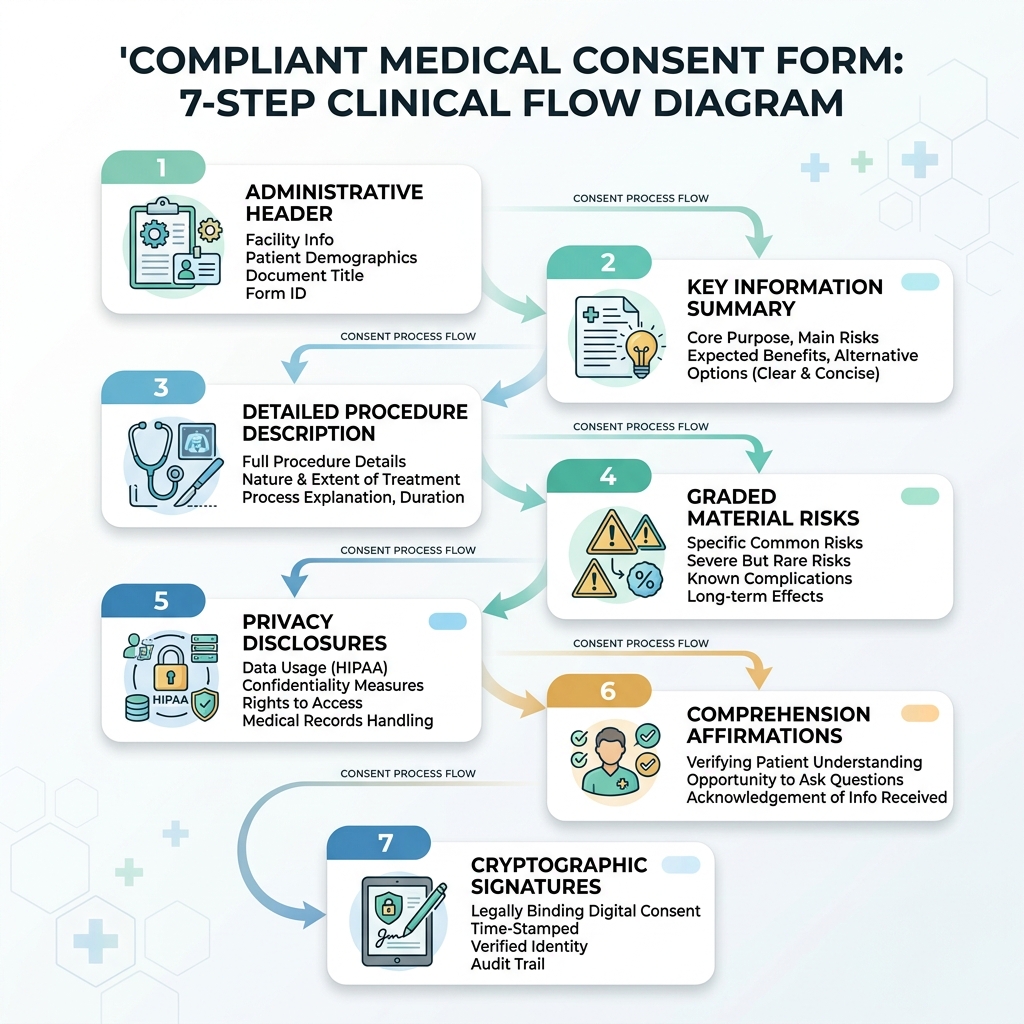
7-Step Anatomy of a Compliant Medical Consent Form

#Zone 1: Patient and Encounter Identifiers

The document header must contain the facility identity, logo, and a clean metadata grid. This area captures:

  • The patient's full legal name.
  • Date of birth.
  • The unique Medical Record Number (MRN).
  • The primary operator or surgeon performing the procedure.
  • The scheduled encounter date.

#Zone 2: The Mandatory "Key Information" Section

Following joint FDA and OHRP updates, clinical documents must lead with a concise summary of the transaction. This block must precede detailed legal descriptions and outline:

  • A clear statement that consent is voluntary.
  • A high-level summary of the procedure purpose.
  • The most common and severe risks.
  • The primary alternatives to the proposed care.

#Zone 3: Clear Procedural Descriptions

This zone explains the intervention in simple, lay terms. Technical medical vocabulary must be accompanied by plain-language descriptions in parentheses. The explanation must define:

  • The specific clinical approach (such as laparoscopic, open, or minimally invasive).
  • The exact anatomical site, including body side if applicable.
  • The expected length of the procedure.
  • The names of all assisting physicians or operators.

#Zone 4: Structured Complications and Alternatives

Complications must be listed in a structured format rather than a solid wall of text. Presenting risks in a comparative layout helps patients understand the stakes. This section must differentiate between:

  • Common, mild reactions: Expected occurrences such as bruising, swelling, or localized discomfort.
  • Rare, catastrophic risks: Less frequent but severe incidents such as permanent nerve damage, organ perforation, or death.
  • Patient-specific risk factors: Complications related to the patient's existing comorbidities, such as diabetes or hypertension.

Alternatives must also be explicitly stated. Declining the procedure entirely must be presented as a choice, detailing the clinical consequences of non-treatment.

#Zone 5: Privacy Disclosures and Administrative Rights

This area outlines how patient data will be stored, who is authorized to review the records, and how privacy is maintained. The text must explain the patient's right to revoke consent at any stage of the clinical journey.

#Zone 6: Checkbox Affirmations

Prior to signing, the layout must present active check-boxes. The patient must actively tick these boxes to verify that they have read the disclosures, received answers to their clinical questions, and voluntarily choose to proceed.

#Zone 7: Sequential Signature Blocks

The document must conclude with official signature lines. In a digital environment, these signature fields must capture the name, signature drawing, and server-verified timestamps of the patient, the clinician obtaining consent, and the witness.


A common error in custom consent forms is the inclusion of exculpatory clauses. Under Federal guidelines (including FDA 21 CFR 50.20 and HHS 45 CFR 46.116), exculpatory language is strictly prohibited. The inclusion of illegal clauses can invalidate the entire document, leaving the healthcare provider vulnerable to litigation.

#Why Exculpatory Clauses Fail

The purpose of informed consent is to document that a patient understood the risks of a procedure and voluntarily accepted them. It is not a mechanism to shield a provider from negligence. If a document asks a patient to waive their constitutional right to sue, or attempts to release a clinic from liability for medical errors, courts will throw the document out. Institutional Review Boards (IRBs) and federal auditors will automatically reject templates containing these violations.

#Compliant vs. Non-Compliant Phrasing

Review the comparison table below to identify and correct illegal waivers in your custom templates:

Prohibited Exculpatory PhrasingCompliant Regulatory Alternative
"The patient agrees to waive all legal rights to seek damages for surgical errors.""By signing this document, you do not waive any of your legal rights as a patient."
"I release the hospital and its clinical staff from any liability for medical negligence.""In the event of injury, the medical team will provide immediate care, but no compensation is automatically provided."
"The clinic is not responsible for side effects, even if they result from provider errors.""The provider has explained the risks of the treatment. You retain your rights to seek legal remedies if you suspect substandard care."
"The signer agrees that the surgeon is not liable for unexpected complications.""Medical procedures carry inherent risks. While the surgical team will take steps to avoid them, complications can occur."

Digital consent systems offer capabilities that paper forms cannot match. Transitioning to electronic consent (eConsent) improves clinical efficiency, increases comprehension, and secures data.

#Progressive Disclosure and Accordion Layouts

Long documents with dense text cause cognitive fatigue, causing patients to sign without reading. eConsent designs use progressive disclosure to keep layouts clean. Patients read high-priority summaries first, then click to expand detailed descriptions of risks or definitions. This approach is essential for mobile devices, where long paragraphs are difficult to parse.

#Integrated Comprehension Quizzes

Instead of hoping a patient reads the form, digital systems can embed brief teach-back quizzes. These questions test understanding of critical risks and alternatives. If a patient answers incorrectly, the system directs them back to the relevant section for review. This workflow generates a documented record of patient comprehension rather than simple document agreement.

#Multi-Signatory Sequential Routing

Complex clinical protocols require signatures from multiple parties. eConsent systems automate this routing sequentially:

  1. Patient or Guardian: Reviews disclosures, completes teach-back quizzes, and signs.
  2. Interpreter: Verifies that translation requirements were met (if applicable).
  3. Clinician / Investigator: Explains the clinical details, answers questions, and signs.
  4. Witness: Verifies the signing identity and applies a final signature.

#6. Standardizing Compliance with ConsentCollect

Drafting and maintaining compliant layouts across multiple clinical specialties can be an administrative challenge. ConsentCollect solves this by providing a secure, compliant, and clinically aware document engine.

#Zero-Risk Evaluation via the Sandbox Tier

A major obstacle in selecting a clinical document system is the inability to test complete workflows without upfront costs. ConsentCollect addresses this by offering a free, fully featured Sandbox Tier that does not require a credit card.

Signing up for the sandbox allows practice managers, compliance officers, and developers to test the entire system. Users can build documents, test client-side encryption, configure sequential signatory routing, and inspect generated schemas. This hands-on evaluation helps teams determine if the platform aligns with their clinical workflows before committing to a commercial plan.

#Core Platform Features

ConsentCollect implements advanced features designed specifically for the strict requirements of healthcare:

  • Intake Wizard: Gathers clinical context (specialty, geographic jurisdiction, form type) and automatically structures layouts to comply with state and federal laws.
  • Active Compliance Linter: Evaluates documents in real-time to ensure mandatory disclosures are present and automatically flags prohibited exculpatory language.
  • Client-Side Key Encryption: Secures patient privacy. All document entries are encrypted client-side using unique workspace keys before data is synchronized with the server.
  • Cryptographic Audit Trails: Generates tamper-evident, forensic records capturing browser metadata, user actions, IP addresses, and server-verified timestamps.
  • EHR Integration via FHIR R4 APIs: Synchronizes finalized consent records directly into Electronic Health Record (EHR) systems such as Epic or Cerner, avoiding manual scanning.

#7. Frequently Asked Questions

A consent document is legally binding when it shows a patient made an informed, voluntary decision. The document must list patient identifiers, a clear description of the procedure, a list of material risks, standard alternatives, active affirmations, and signatures from the patient, clinician, and witness.

Yes, eConsent is highly recommended for clinical trials. Platforms must implement systems that comply with FDA 21 CFR Part 11 regulations, including secure user logins, non-repudiation clauses, and automated, tamper-evident audit logs.

#How do clinics prevent patients from skipping forms?

Clinics use progressive disclosure layouts to make forms easier to read. Toggling detailed sections prevents cognitive fatigue. Additionally, teach-back quizzes ensure patients read and understand the document before signing.

#Are forms created in the free builder HIPAA compliant?

Free templates and builders are designed for layout drafting. To satisfy HIPAA, FDA, and GDPR compliance, organizations must route documents through a secure, encrypted platform such as ConsentCollect that executes a Business Associate Agreement (BAA).

#How can developers integrate these forms into custom EHRs?

ConsentCollect exports templates as structured JSON schemas. Completed documents can be pushed to Electronic Health Records using standard FHIR R4 APIs, ensuring clinical data remains synchronized.